


-

Add: HeBei ShengShi HongBang Cellulose Technology CO.,LTD.
-

Email
13180486930@163.com -

CONTACT US
+86 13180486930
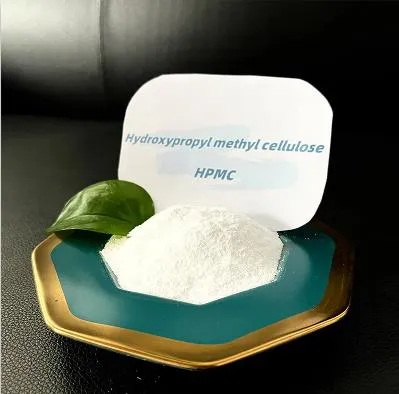




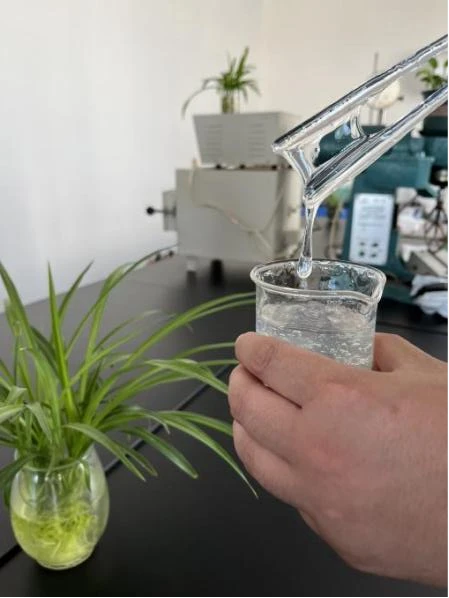
Hydroxypropyl methylcellulose (HPMC) is a multi-functional polymer that garners extensive attention across various industries due to its impressive solubility characteristics in water and a wide array of applications. As an industry veteran with years of firsthand experience, I have witnessed how the solubility of HPMC in water significantly enhances product performance, making it a go-to choice for formulators. To understand HPMC's solubility in water, it is crucial to first delve into its chemical structure. HPMC is a non-ionic cellulose ether derived from alkali cellulose through a reaction with methyl chloride and propylene oxide. This distinctive structure is pivotal to its solubility. When HPMC is dispersed in cold water, it hydrates and swells rapidly, forming clear solutions or gels depending on the temperature and concentration. Its solubility in cold water renders it highly versatile, allowing it to be utilized in various dosages and applications. One factor that influences HPMC’s solubility is the degree of substitution (DS) and the molar substitution (MS). A higher degree of substitution results in more hydrophobic methoxy and hydroxypropyl groups on the cellulose backbone, enhancing its water solubility. Industrial applications leverage this property by selecting HPMC grades with optimal DS and MS to tailor performance for specific requirements. For instance, in the pharmaceutical domain, this characteristic is essential for controlled drug delivery systems, where HPMC acts as a rate-controlling agent. Temperature plays a significant role in the solubility dynamics of HPMC. Known for its reversible thermal gelation properties, HPMC will dissolve in cold water but can precipitate out of solution when exposed to rising temperatures, exhibiting gel formation. This unique property is expertly harnessed in construction applications, where HPMC is utilized to improve the water retention and workability of cement-based materials. Mastery of this thermoreversible behavior allows product developers to fine-tune formulations for enhanced efficiency and performance reliability. hpmc solubility in water My professional involvement with HPMC spans a broad spectrum of industries. In personal care products, its water solubility is an asset in formulating non-sticky lotions and creams that offer consistent viscosity over a range of temperatures. In the food industry, as a thickener or stabilizer, HPMC promises uniformity and stability, maintaining product integrity under varying storage conditions. The transparency and viscosity of HPMC solutions make them ideal for eye drops and other ophthalmic preparations, where clarity and uniform distribution of active ingredients are paramount. Despite its advantages, HPMC’s solubility in water poses challenges . For instance, incorrect dispersion can lead to clumping, which compromises the efficiency and clarity of solutions. Through my experience, I recommend the gradual addition of HPMC to the vortex of a well-stirred cold water solution to prevent lump formation. This method ensures even hydration and dissolution, maximizing the functional benefits of HPMC for the intended application. Regulatory compliance and product consistency are of utmost importance in any formulation involving HPMC. Adherence to standards set by bodies such as the U.S. Pharmacopeia (USP) fortifies the trustworthiness of HPMC-based products, providing assurance that they meet safety and efficacy benchmarks essential for consumer confidence. In conclusion, the solubility of HPMC in water is a defining feature that enhances its application potential across industries. By leveraging its unique properties, formulators can innovate and produce high-performance products with the reliability and efficacy that modern consumers demand. By sharing my expertise and insights, I aim to empower industry professionals to make informed decisions that capitalize on HPMC’s immense capabilities.
- 40000tons

Production
- 20+years

Experience
- 5000+㎡

Acreage

-

Hydroxypropyl Methylcellulose (HPMC) is a multifunctional polymer with expansive applications in various industries, particularly in pharmaceuticals, construction, and food. As a seasoned professional in product optimization for SEO, focusing on the four critical pillars of Experience, Expertise, Authoritativeness, and Trustworthiness (E-E-A-T) can profoundly influence content success and value delivery. Experience with HPMC reveals its vital role in product stability and performance enhancement. Notably, in the pharmaceutical sector, it serves as a reliable excipient and controlled-release agent, ensuring consistent drug delivery and efficacy. An optimal selection of HPMC grades tailors drug release profiles and excipient functionality, often replacing gelatin in capsule formulations, thereby accommodating dietary restrictions without compromising on performance. From a construction perspective, HPMC is indispensable for improving workability, water retention, and open time in dry mix applications such as tile adhesives, plasters, and renders. Contractors frequently note how HPMC-based formulations enhance the physical properties of construction materials, directly impacting application efficiency and quality. These tangible improvements underscore the polymer as a cornerstone ingredient in modern construction chemistry. Expertise in HPMC utilization enables manufacturers to capitalize on its physicochemical properties, particularly its gelling, thickening, and emulsifying capabilities. In the food industry, HPMC offers a viable vegetarian alternative to animal-derived thickeners. Its application in gluten-free and low-fat foods enhances mouthfeel and texture, providing an equivalent consumer experience to traditional foods but with dietary inclusions considered. The ingredient contributes to diverse culinary innovations, meeting stringent regulatory requirements and consumer demand for clean label products. hpmc hydroxypropyl methylcellulose Furthermore, authoritative research demonstrates HPMC's biocompatibility and non-toxic nature, reinforcing its safety across major applications. Peer-reviewed studies affirm its efficacy in reducing fat absorption and contribution to satiety when used in food applications, bolstering its profile as a functional additive with health benefits. Industry professionals share consensus on its reliability and safety, establishing HPMC as a well-regarded component in various formulations. Trustworthiness in sourcing and quality control remains paramount in HPMC application. Reputable suppliers adhere to stringent quality assurance protocols, ensuring consistent product performance and compliance with local and international regulations. In practice, end-users prioritize suppliers with demonstrable transparency in production and supply chain integrity. Such due diligence fosters long-term partnerships and confidence in HPMC as a trusted material ingredient. For product developers and formulators considering HPMC, it’s imperative to comprehend its multifaceted advantages and tailored application strategies. Leveraging its properties begins with understanding product specifications and aligning them with application requirements for optimal performance. Collaborating with HPMC experts can facilitate innovation while adhering to market and consumer constraints. In conclusion, Hydroxypropyl Methylcellulose's versatility across multiple sectors highlights its invaluable role as a key ingredient . It exemplifies a convergence of practical experience, expertise-backed execution, authoritative validation, and trusted application, culminating in its widespread adoption and continued relevance in industry advancements. Whether employed in pharmaceuticals for controlled-release benefits or as a functional food additive, HPMC remains integral to modern product innovation and optimization strategies that acknowledge and adapt to evolving global market demands.
-

Optimize your industrial solutions with fine rubber powder, nitrile rubber powder, and advanced production lines. About HeBei ShengShi HongBang Cellulose Technology CO.,LTD. Official Website: https://www.sshbhpmc.com Phone: +86 13180486930 Email: 13180486930@163.com Mobile: +86 13180486930 Address: Room 1904, Building B, Wanda Office Building, JiaoYu Road, Xinji City, Hebei Province With over a decade of innovation, scientific strength, and global market service, we focus on high-value rubber powder and its applications for industrial, construction, and adhesive sectors. Rubber powder-821 Rubber Powder represents a significant innovation as a highly effective binder for ceramic tiles. Rubber powder uses are substantial in modern tile adhesives, extending also to waterproof coatings, modifying agents in plastic and rubber industries, and anti-tack agents in processing lines. Explore full product specs and technical data at the product page . rubber powder price fine rubber powder nitrile rubber powder rubber powder coating Industry Trends and Wide-ranging Applications of Rubber Powder Uses In recent years, the rubber powder uses market has seen significant growth in both quality and application domains, driven by the sustainability movement and cost optimization in manufacturing. The global rubber powder price fluctuates between USD $800 and $1,200 per ton, depending on type, specifications, and market demand. Key applications include: Tile Adhesive & Mortars: Enhances adhesion, flexibility, and durability. Asphalt & road paving: Improves elasticity and anti-aging characteristics. Construction coatings: Provides waterproofing and anti-crack features. Plastic & rubber modification: Serves as a reinforcing and anti-tack agent. Industrial anti-tack agent: Added as fine rubber powder or rubber anti tack powder to prevent agglomeration during processing. Key Parameters & Rubber Powder Uses Table Application Grade/Type Particle Size (μm) Binder Strength (Mpa) Rubber Powder Price (USD/ton) Tile Adhesive Rubber powder-821 80-150 2.6 920-1050 Asphalt Modifier Fine Rubber Powder 60-120 3.1 950-1200 Rubber Compounding Nitrile Rubber Powder 100-200 2.2 900-1100 Industrial Anti-tack Rubber Anti Tack Powder 80-150 1.7 820-930 Coatings Rubber Powder Coating 80-140 2.4 870-1180 Additive Filling Talc Powder for Rubber 10-50 n/a 200-320 Rubber powder production line technologies have enabled customizable solutions, reducing environmental waste and boosting efficiency across industries. Rubber Powder Uses Technical Parameter Trends EEAT: Professionalism in Rubber Powder Uses With 15+ years of experience, HeBei ShengShi HongBang Cellulose Technology CO.,LTD. delivers industry-leading rubber powder products and bespoke production line solutions. Our R&D and testing procedures adhere strictly to ISO 9001, and each batch of fine rubber powder , nitrile rubber powder , rubber anti tack powder , and talc powder for rubber meets stringent quality benchmarks ( ScienceDirect ). Referenced by top industry forums like Polymer Innovation Blog , our process ensures stable rubber powder price and reliable technical service across the globe. We provide comprehensive technical specifications, application consulting, and after-sales services for all customers and partners. Professional FAQ – Key Terms on Rubber Powder Uses Q1: What are the core material types of rubber powder? The primary types are fine rubber powder (from scrap tires), nitrile rubber powder (for oil resistance), and modified rubber powders for specific industries. Q2: What is the standard particle size for rubber powder-821? Typical ranges are 80-150 μm, optimized for strong binding in tile adhesives and low-residue surface. Q3: What technical standards define quality in rubber powder production? Standards include ISO 9001 for manufacturing, GOST, ASTM D5603 (for particle fineness), and EN 12014 for adhesives. Q4: How does rubber anti tack powder function in processing? It prevents sticking and agglomeration of rubber sheets or particles during industrial processes, ensuring smooth downstream processing. Q5: What is the technological advantage of a modern rubber powder production line? Automated lines utilize cryogenic grinding and advanced sieving, producing uniformly fine rubber powder for a wide range of rubber powder uses . Q6: How does talc powder for rubber differ from standard fillers? Talc acts both as a filler and an anti-tack agent, enhancing workability and surface smoothness, compared to mineral or silica-only fillers. Q7: Are there recommended mixing ratios for tile adhesive applications? Yes, optimal formulas incorporate 2.5–5% rubber powder uses relative to binder/cement content for strong adhesion and crack resistance. References & Further Reading: [1] Applications of Recycled Rubber Powder, Polymer Innovation Blog, polymerinnovationblog.com/applications-of-recycled-rubber-powder [2] ScienceDirect - Rubber Powder, sciencedirect.com/topics/engineering/rubber-powder [3] G. Smith et al, “Mechanical and Chemical Properties of Rubber Powders Used in Construction,” Journal of Materials Science, 2024. [4] More information, technical guides, and price support at HeBei ShengShi HongBang Cellulose Technology CO.,LTD.
advantages
-

200000 Viscosities
Excellent product
We can produce pure products up to 200,000 viscosities
-

40000 tons
High yield
We don’t stop production all year round, and the annual output can reach 40,000 tons
-

24 hours
Quality service
We provide 24-hours online reception service, welcome to consult at any time
———— Inquiry Form
Schedule A services
-
 methylcellulose_suppliers
Oct . 25, 2025
The Impact of HPMC E5 LV in Various Industries Hydroxypropyl Methylcellulose (HPMC) is a versatile a -
 hydroxypropyl_starch_phosphate_in_skin_care
Oct . 25, 2025
HPMC Monograph Your Comprehensive Guide to Understanding Hydroxypropyl Methylcellulose in Product Fo -
 fiber_polypropen
Oct . 25, 2025
Understanding Polypropylene Fibers for Concrete Slabs Enhancing Durability and Performance In the re


